Publication: Plasma chemistry, erythrocyte, and spleen responses to fatigue and recovery in Ucrit versus chase protocols in mahi-mahi (Coryphaena hippurus), a high-performance pelagic teleost
Publication: Plasma chemistry, erythrocyte, and spleen responses to fatigue and recovery in Ucrit versus chase protocols in mahi-mahi (Coryphaena hippurus), a high-performance pelagic teleost
Wed, Nov 18 2026
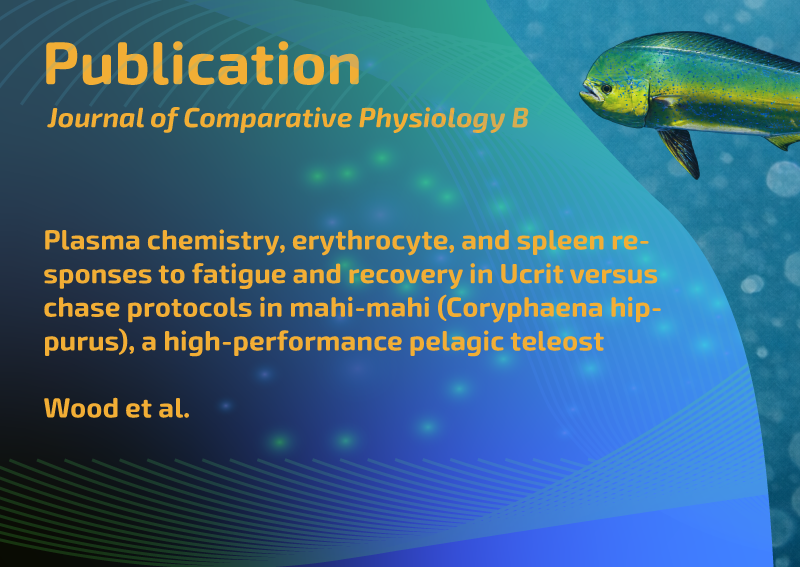
A recent study from Chris M. Wood and colleagues at Miami University Rosenstiel School of Marine, Atmospheric, and Earth Science investigated how mahi-mahi (Coryphaena hippurus) respond physiologically to two commonly used methods of exercise to fatigue: critical swimming speed (Ucrit) and exhaustive chasing.
The researchers combined biochemical and physical measurements of plasma chemistry, red blood cell and spleen responses, allowing them to investigate the mechanisms underlying fatigue and recovery.
Ucrit trials were performed using 90 L Swim Tunnel Respirometers with AutoResp™, where swimming speed was increased by 0.5 body lengths per second every 20 minutes until fatigue. The same mahi-mahi were also used in a companion study comparing oxygen consumption between Ucrit and chase exercise.
The two exercise methods produced substantially different physiological responses. Plasma lactate increased approximately 6-fold after chasing, compared with around 2-fold following Ucrit swimming. Plasma magnesium also increased by 111% following chasing compared with 48% after Ucrit.
Together with measurements of post-exercise oxygen consumption and tissue metabolites, these results indicate that chase exercise produced a greater contribution from anaerobic metabolism, while Ucrit swimming relied more strongly on aerobic metabolism and oxygen delivery to the red swimming muscle.
Interestingly, these differences were not simply the result of a greater stress response during chasing. Cortisol increased more than 4-fold following both exercise protocols, with most measured physiological parameters returning toward control levels during recovery.
The study demonstrates that although Ucrit and chase protocols can both exercise fish to fatigue, they measure distinctly different aspects of performance.
We recently had the pleasure of getting a closer look, when some of the researchers opened their lab to us and showed how they work with Loligo ® tools to understand swimming performance and physiology. Check out the video here 👇
https://www.linkedin.com/feed/update/urn:li:activity:7526237022173175808
The paper “Plasma chemistry, erythrocyte, and spleen responses to fatigue and recovery in Ucrit versus chase protocols in mahi-mahi (Coryphaena hippurus), a high-performance pelagic teleost,” was published in Journal of Comparative Physiology B in 2026 and can be found online at https://doi.org/10.1007/s00360-026-01679-8.
Do you want to learn more about the Swim Tunnel systems used in this research?